


How do bundling chains safeguard the safety and order of cargo transportation with their robust construction?
Release Time : 2026-01-27
In the vast system of modern logistics and industrial transportation, every journey of goods from the production site to the consumer terminal relies on reliable securing and stable restraint. Ordinary strapping is often insufficient for high-value or high-risk cargo such as heavy machinery, large pipes, steel structural components, and even containers. At this time, bundling chains, crafted from high-quality alloy steel, become a key force in ensuring transportation safety due to their superior strength, wear resistance, and corrosion resistance. Though silent, they firmly lock in stability and trust through the rigor of metal on bumpy roads.
The core advantage of bundling chains stems from the dual guarantees of their materials and craftsmanship. Forged from high-strength alloy steel, each link undergoes precision heat treatment, resulting in a dense internal structure and uniform external hardness. This allows them to maintain structural integrity even under immense tensile forces, resisting deformation or breakage. Even after long-term use under frequent friction, impact, or harsh weather conditions, their mechanical properties remain stable and reliable. This inherent toughness makes it the preferred choice for demanding scenarios such as heavy transport, ship deck securing, rail freight, and the transfer of construction machinery.
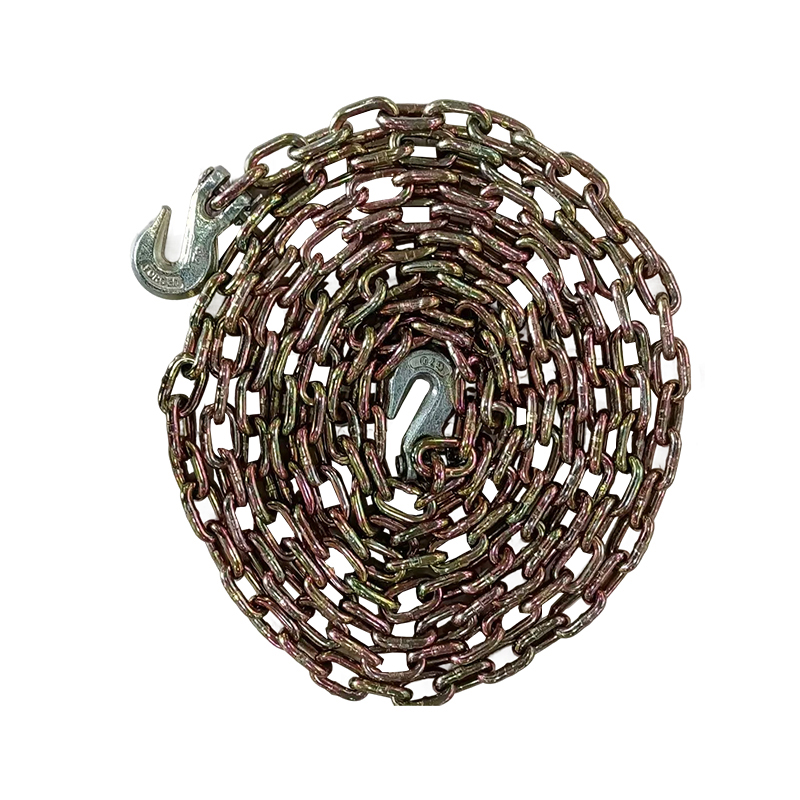
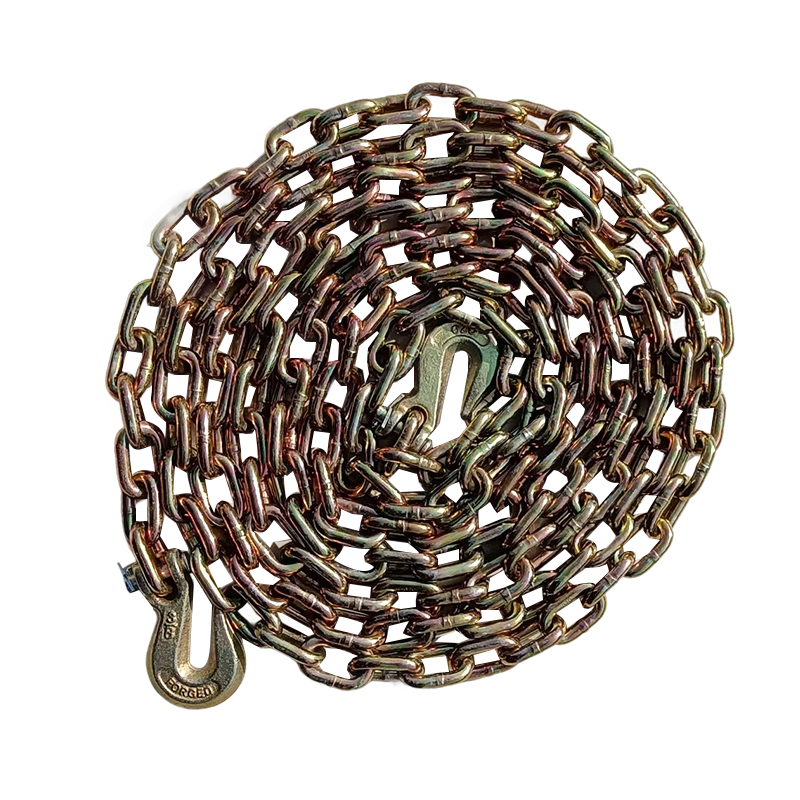
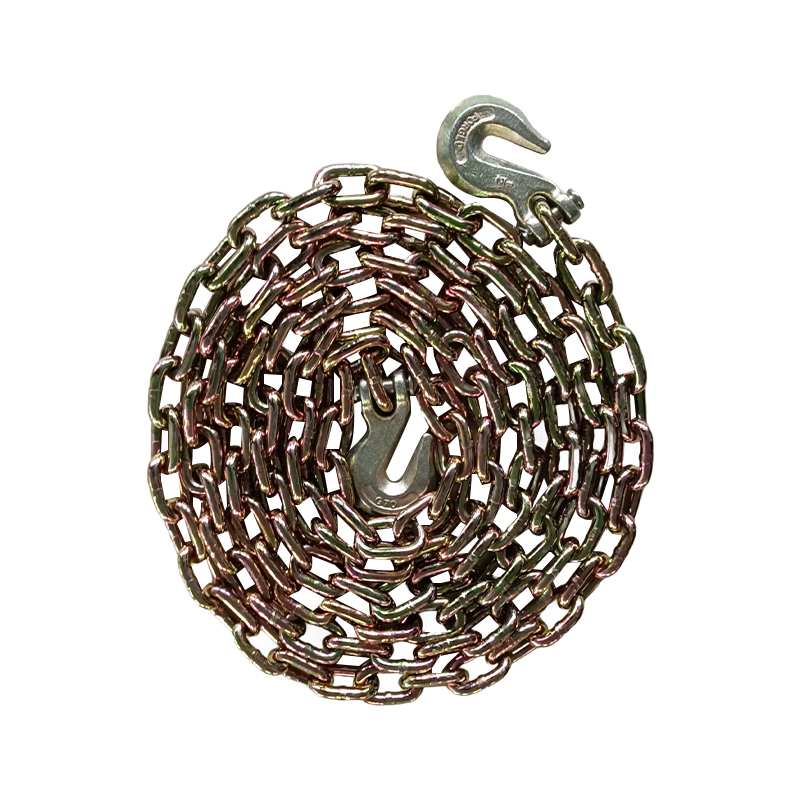
To balance protection and practicality, the surface of the bundled chain undergoes fine polishing and a special coating treatment. The links are smooth and rounded, without burrs or sharp edges, preventing scratches to the paint, coatings, or precision surfaces of the cargo during fastening. This detail is especially important when transporting automobiles, high-end equipment, or materials with sensitive surfaces. Simultaneously, the smooth surface facilitates daily cleaning; oil, mud, or salt residue can be easily washed away, preventing corrosion and extending service life.
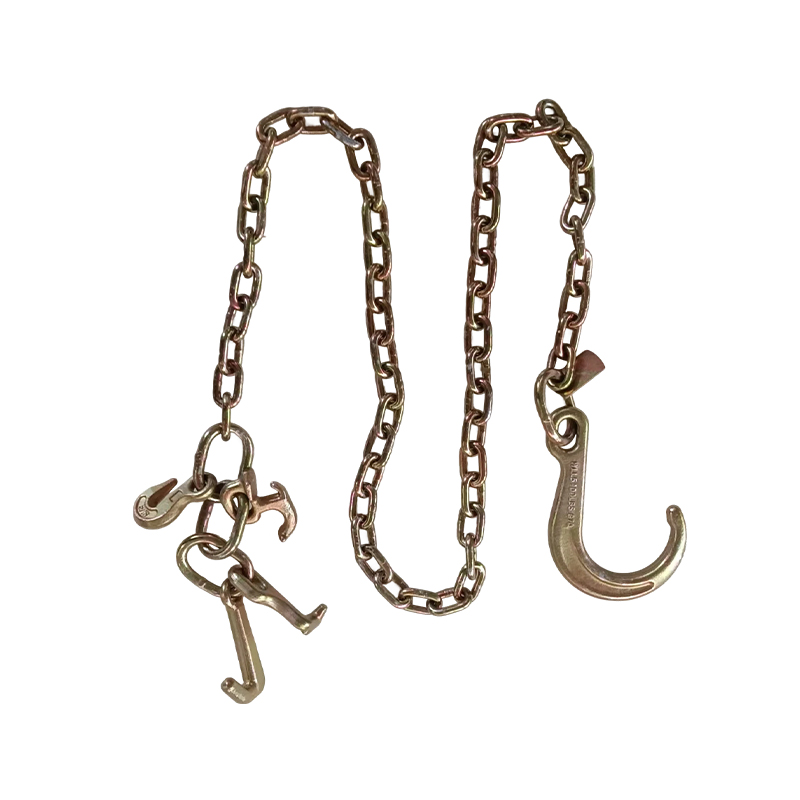
Operationally, the bundled chain is typically used in conjunction with tensioners, hooks, or tensioning devices to form a complete securing system. Through the principle of mechanical leverage, the operator can apply sufficient preload to create a rigid connection between the cargo and the carrier, effectively suppressing slippage, tipping, or resonance during transport. The chain's flexible structure also gives it excellent adaptability, allowing it to wrap around irregularly shaped objects and conform to complex contours, achieving a balanced distribution of force across multiple points. This combination of rigidity and flexibility is unmatched by other rigid fastening methods.
Safety is not only reflected in physical strength but also throughout the entire lifecycle. High-quality bundled chains undergo rigorous tensile testing and non-destructive testing before leaving the factory to ensure they are free of internal cracks or defects. Some products also feature safety markings or color codes for easy identification of load-bearing capacity. When used correctly, it significantly reduces the risk of traffic accidents, equipment damage, or personal injury caused by cargo shifting, providing robust support for the most vulnerable link in the logistics chain.
Furthermore, the reusability of bundled chains aligns with sustainable development principles. Compared to disposable plastic or fiber strapping, metal chains are durable, have low maintenance costs, and offer superior long-term economic benefits. Even after years of service, their remaining strength can be assessed through professional testing, maximizing resource utilization. After disposal, the steel can be recycled, reducing environmental burden.
Bundled chains are ubiquitous in ports, warehouses, construction sites, and even military logistics. It doesn't pursue lightness, but rather reliability; it doesn't emphasize speed, but focuses on stability. Every tightening is a confirmation of responsibility; every escort is a promise of safety.
The existence of the bundling chain embodies a simple yet profound wisdom of industrial civilization: true security often comes from unseen constraints. With the silence of metal, it safeguards the order of a fluid world; with its interlocking structure, it weaves an invisible yet unbreakable safety net. On this long road connecting production and consumption, the bundling chain, though not the protagonist, is an indispensable unsung hero.
The core advantage of bundling chains stems from the dual guarantees of their materials and craftsmanship. Forged from high-strength alloy steel, each link undergoes precision heat treatment, resulting in a dense internal structure and uniform external hardness. This allows them to maintain structural integrity even under immense tensile forces, resisting deformation or breakage. Even after long-term use under frequent friction, impact, or harsh weather conditions, their mechanical properties remain stable and reliable. This inherent toughness makes it the preferred choice for demanding scenarios such as heavy transport, ship deck securing, rail freight, and the transfer of construction machinery.
To balance protection and practicality, the surface of the bundled chain undergoes fine polishing and a special coating treatment. The links are smooth and rounded, without burrs or sharp edges, preventing scratches to the paint, coatings, or precision surfaces of the cargo during fastening. This detail is especially important when transporting automobiles, high-end equipment, or materials with sensitive surfaces. Simultaneously, the smooth surface facilitates daily cleaning; oil, mud, or salt residue can be easily washed away, preventing corrosion and extending service life.
Operationally, the bundled chain is typically used in conjunction with tensioners, hooks, or tensioning devices to form a complete securing system. Through the principle of mechanical leverage, the operator can apply sufficient preload to create a rigid connection between the cargo and the carrier, effectively suppressing slippage, tipping, or resonance during transport. The chain's flexible structure also gives it excellent adaptability, allowing it to wrap around irregularly shaped objects and conform to complex contours, achieving a balanced distribution of force across multiple points. This combination of rigidity and flexibility is unmatched by other rigid fastening methods.
Safety is not only reflected in physical strength but also throughout the entire lifecycle. High-quality bundled chains undergo rigorous tensile testing and non-destructive testing before leaving the factory to ensure they are free of internal cracks or defects. Some products also feature safety markings or color codes for easy identification of load-bearing capacity. When used correctly, it significantly reduces the risk of traffic accidents, equipment damage, or personal injury caused by cargo shifting, providing robust support for the most vulnerable link in the logistics chain.
Furthermore, the reusability of bundled chains aligns with sustainable development principles. Compared to disposable plastic or fiber strapping, metal chains are durable, have low maintenance costs, and offer superior long-term economic benefits. Even after years of service, their remaining strength can be assessed through professional testing, maximizing resource utilization. After disposal, the steel can be recycled, reducing environmental burden.
Bundled chains are ubiquitous in ports, warehouses, construction sites, and even military logistics. It doesn't pursue lightness, but rather reliability; it doesn't emphasize speed, but focuses on stability. Every tightening is a confirmation of responsibility; every escort is a promise of safety.
The existence of the bundling chain embodies a simple yet profound wisdom of industrial civilization: true security often comes from unseen constraints. With the silence of metal, it safeguards the order of a fluid world; with its interlocking structure, it weaves an invisible yet unbreakable safety net. On this long road connecting production and consumption, the bundling chain, though not the protagonist, is an indispensable unsung hero.