


How does the bundling chain safeguard safety and reliability in logistics and transportation with its metallic toughness?
Release Time : 2026-02-06
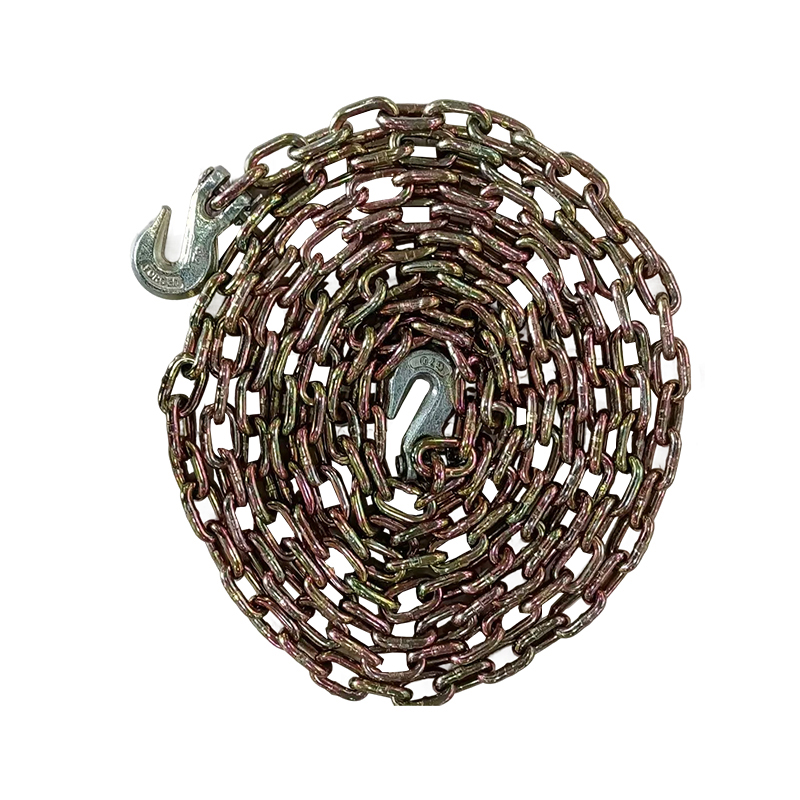
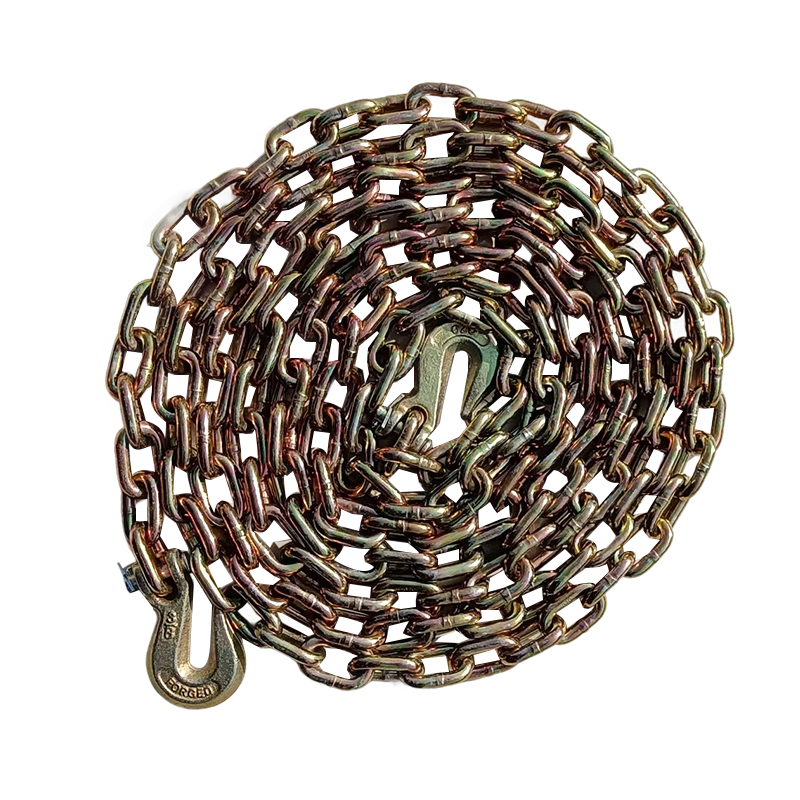
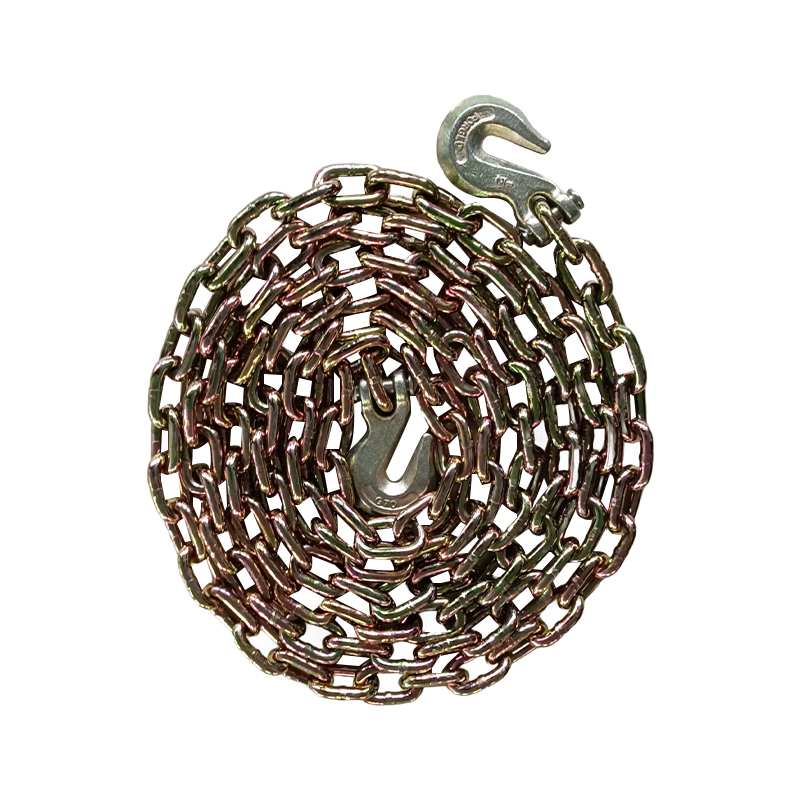
In the vast network of modern logistics and industrial transportation, every movement of goods from factory to port, from warehouse to end user, relies on an invisible yet crucial safety guarantee system. The bundling chain—a heavy-duty connector crafted from high-quality alloy steel—is a rock-solid link in this system. Unlike packaging, it's not conspicuous, nor does it convey information like labels, but with its high strength, toughness, wear-resistant structure, and gentle contact surfaces, it silently undertakes the mission of "rock-solid stability" in securing containers, pallets, heavy machinery, and even hazardous materials, becoming the most reliable physical guarantee for transportation safety.
The core value of the bundling chain stems from its dual advancements in materials and craftsmanship. Forged from high-strength alloy steel, each chain link undergoes heat treatment for reinforcement, ensuring it remains undeformed and unbreakable under immense tensile force. Special polishing or coating treatments not only enhance corrosion resistance, making it suitable for seaborne salt spray, rain, or chemical environments, but also result in a smooth and delicate feel to prevent scratching of precision equipment casings, automotive paint, or wooden crates during tightening. This "combination of strength and flexibility" allows it to handle both heavy loads and delicate cargo.
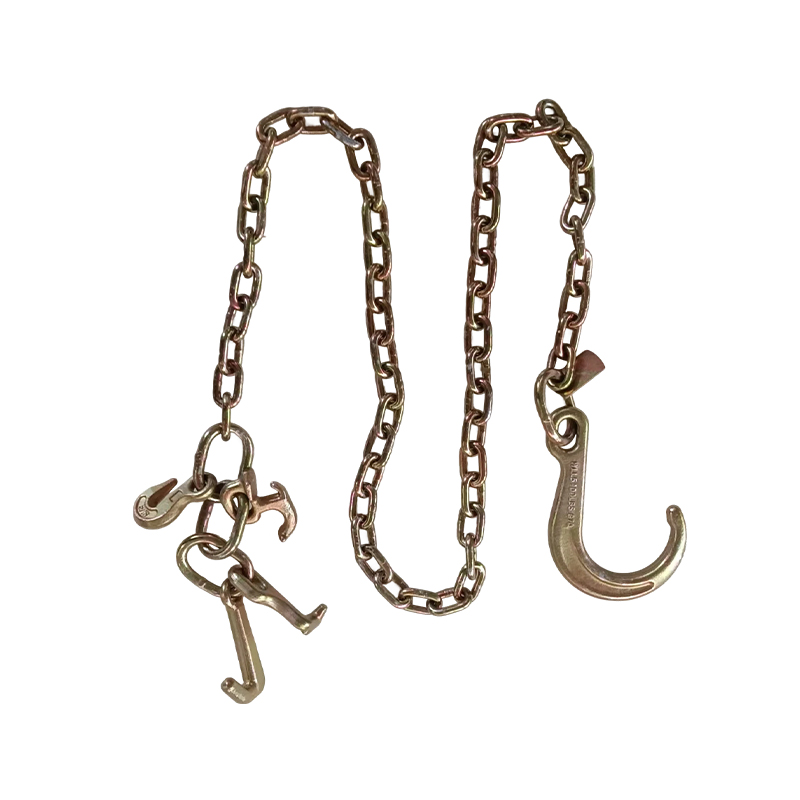
Its structural design also reflects engineering ingenuity. Precision riveting or welding forms a closed loop between chain links, ensuring even stress distribution. Combined with specialized tensioners, hooks, or tensioning devices, it can quickly secure and apply pre-tension, effectively suppressing displacement and collisions caused by bumps, turns, or sudden braking during transport. Even under extreme temperature differences or prolonged vibration, the chain maintains its initial tension, preventing loosening. This reliability makes it widely used in scenarios with extremely high safety requirements, such as the export of engineering machinery, the transport of wind power equipment, and the transport of military equipment.
The ease of maintenance further extends its service life. The chain surface is burr-free and free of welding slag, making it difficult for dirt to adhere; daily cleaning requires only rinsing with water or simple wiping. Regular lubrication keeps the joints flexible and prevents rust and jamming. Some high-end products also offer detachable chain links for easy partial replacement, reducing overall operating costs. This "low-maintenance, long-cycle" characteristic aligns with modern logistics' dual pursuit of efficiency and sustainability.
At a deeper level, the bundled chain symbolizes the physical embodiment of responsibility and trust. When a chain firmly secures a multi-ton transformer to a flatbed truck, it maintains not only the goods themselves but also the continuity of the supply chain, customer delivery commitments, and public road safety. The operator's confirmation of the chain's condition during each pre-departure inspection is, in effect, a practice of the "absolutely foolproof" principle. This seemingly simple metal connection is, in fact, a concrete expression of "reliability" in industrial civilization.
In today's era of intelligent logistics, although the bundled chain does not embed chips or sensors, its pure mechanical reliability makes it an indispensable physical foundation for digital systems. Automated Guided Vehicles (AGVs) at unmanned terminals and in smart warehouses still rely on high-strength chains to complete critical fixed tasks. Technology may iterate, but the fundamental requirements of "no loosening, no breakage, and no damage to cargo" remain unchanged.
Though silently residing in the corners of cargo holds, the bundling chain is the most loyal guardian of transportation safety. Its cold, metallic sheen bears immense weight, while its smooth surface conveys meticulous care. In every contact between steel and cargo, it silently proclaims: true security lies not in slogans, but in the solid interlocking of every link; true trust begins with the silent promise of a single chain.
The core value of the bundling chain stems from its dual advancements in materials and craftsmanship. Forged from high-strength alloy steel, each chain link undergoes heat treatment for reinforcement, ensuring it remains undeformed and unbreakable under immense tensile force. Special polishing or coating treatments not only enhance corrosion resistance, making it suitable for seaborne salt spray, rain, or chemical environments, but also result in a smooth and delicate feel to prevent scratching of precision equipment casings, automotive paint, or wooden crates during tightening. This "combination of strength and flexibility" allows it to handle both heavy loads and delicate cargo.
Its structural design also reflects engineering ingenuity. Precision riveting or welding forms a closed loop between chain links, ensuring even stress distribution. Combined with specialized tensioners, hooks, or tensioning devices, it can quickly secure and apply pre-tension, effectively suppressing displacement and collisions caused by bumps, turns, or sudden braking during transport. Even under extreme temperature differences or prolonged vibration, the chain maintains its initial tension, preventing loosening. This reliability makes it widely used in scenarios with extremely high safety requirements, such as the export of engineering machinery, the transport of wind power equipment, and the transport of military equipment.
The ease of maintenance further extends its service life. The chain surface is burr-free and free of welding slag, making it difficult for dirt to adhere; daily cleaning requires only rinsing with water or simple wiping. Regular lubrication keeps the joints flexible and prevents rust and jamming. Some high-end products also offer detachable chain links for easy partial replacement, reducing overall operating costs. This "low-maintenance, long-cycle" characteristic aligns with modern logistics' dual pursuit of efficiency and sustainability.
At a deeper level, the bundled chain symbolizes the physical embodiment of responsibility and trust. When a chain firmly secures a multi-ton transformer to a flatbed truck, it maintains not only the goods themselves but also the continuity of the supply chain, customer delivery commitments, and public road safety. The operator's confirmation of the chain's condition during each pre-departure inspection is, in effect, a practice of the "absolutely foolproof" principle. This seemingly simple metal connection is, in fact, a concrete expression of "reliability" in industrial civilization.
In today's era of intelligent logistics, although the bundled chain does not embed chips or sensors, its pure mechanical reliability makes it an indispensable physical foundation for digital systems. Automated Guided Vehicles (AGVs) at unmanned terminals and in smart warehouses still rely on high-strength chains to complete critical fixed tasks. Technology may iterate, but the fundamental requirements of "no loosening, no breakage, and no damage to cargo" remain unchanged.
Though silently residing in the corners of cargo holds, the bundling chain is the most loyal guardian of transportation safety. Its cold, metallic sheen bears immense weight, while its smooth surface conveys meticulous care. In every contact between steel and cargo, it silently proclaims: true security lies not in slogans, but in the solid interlocking of every link; true trust begins with the silent promise of a single chain.