



Can bundling chains withstand the load-bearing requirements of securing irregular or heavy cargo?
Release Time : 2026-02-11
In modern logistics, industrial transportation, and the handling of large equipment, cargo varies greatly in shape and weight—from engineering machinery and metal components to large stone materials and wind turbine blades—often characterized by their large size, shifted center of gravity, hard surfaces, and even sharp edges. Faced with such irregular or heavy cargo, ordinary binding materials such as webbing, nylon rope, or plastic strapping are prone to breakage, slippage, or wear, making it difficult to ensure transportation safety. Bundling chains, made of high-quality alloy steel, have become the preferred securing tool in demanding scenarios due to their superior mechanical properties and structural characteristics.
1. High-strength alloy steel material lays the foundation for load-bearing capacity
Bundling chains are typically made of heat-treated high-quality alloy steel, with a tensile strength exceeding 800 MPa, and some high-strength models even exceeding 1200 MPa. This means that a single chain can withstand tens of tons of tensile force, far exceeding conventional flexible binding materials. This material not only boasts high strength but also excellent toughness, resisting brittle fracture under sudden impacts or vibration loads. It effectively absorbs dynamic stress during transportation, providing a "rigid yet flexible" restraint for heavy cargo.
2. Flexible Chain Structure to Fit Irregular Shapes
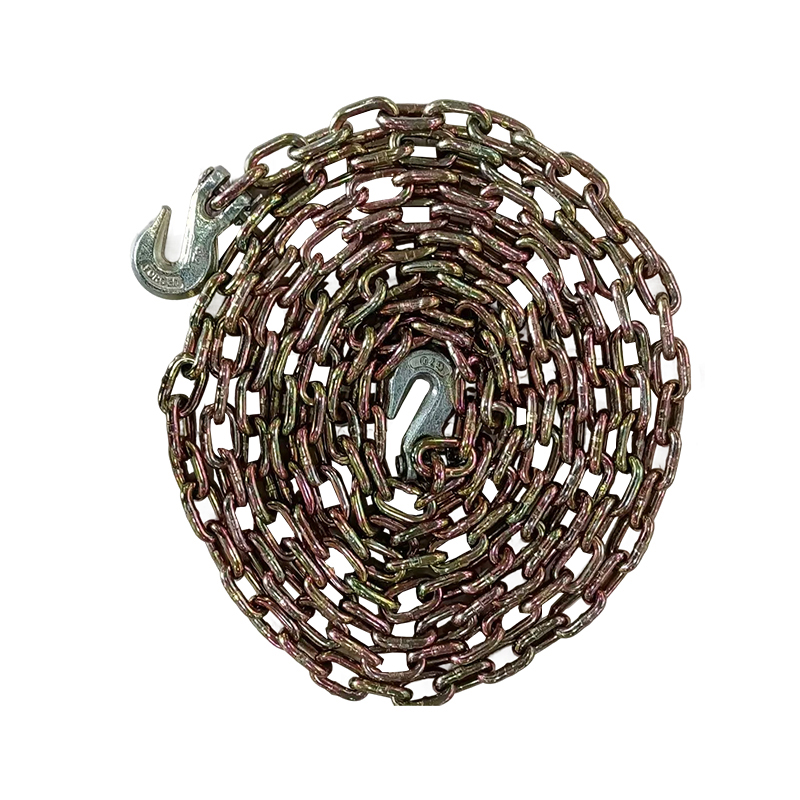
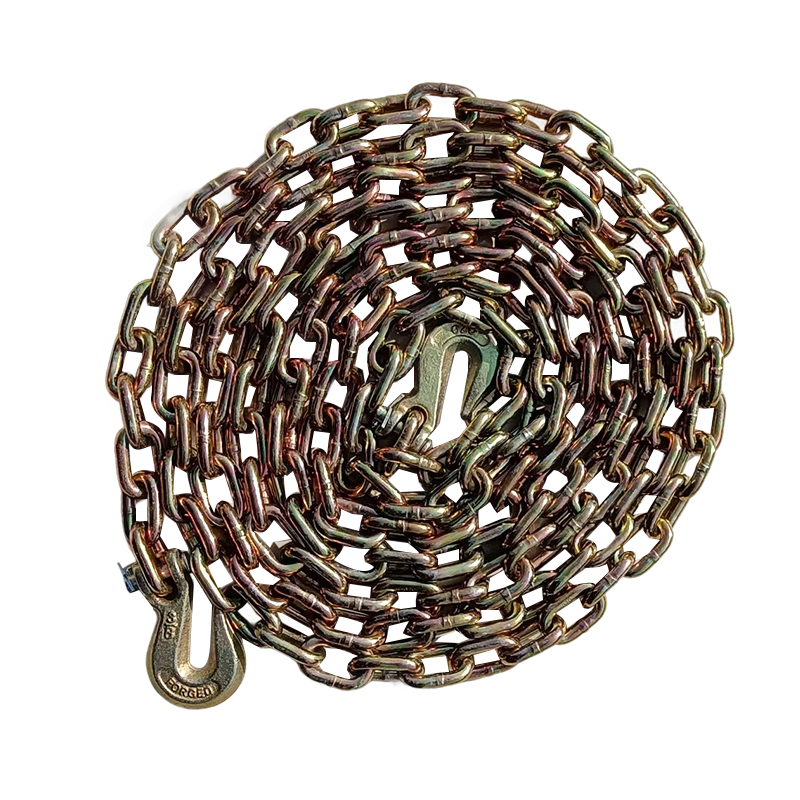
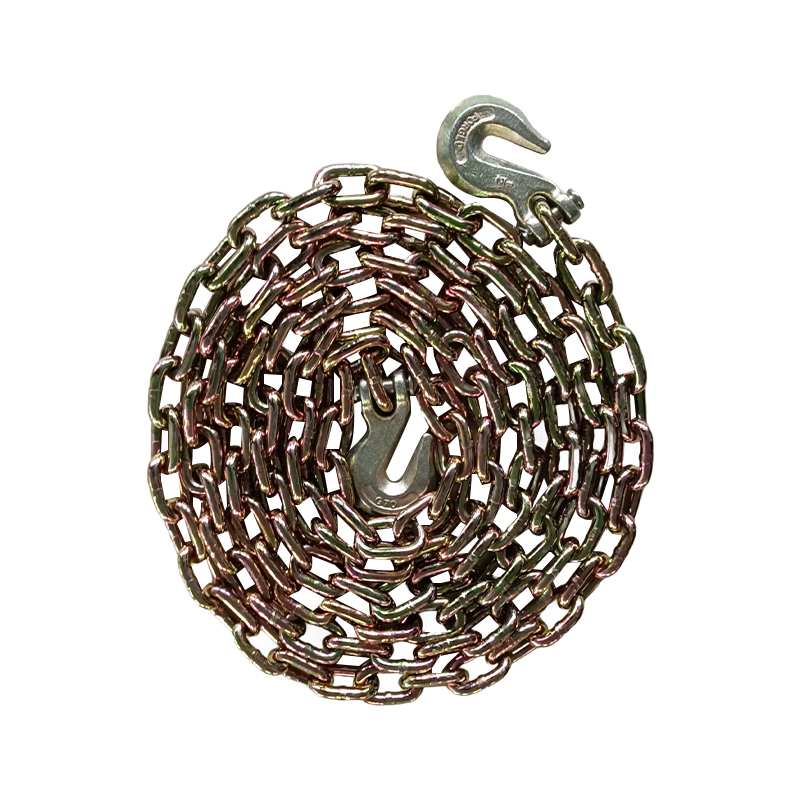
Unlike rigid beams or straight straps, bundled chains are composed of multiple independent hinged links, possessing inherent flexibility and malleability. When securing irregularly shaped cargo, the chain naturally bends and wraps around the cargo surface, closely conforming to its geometric contours. By appropriately selecting the binding points and tensioning methods, localized pressure can be effectively dispersed, preventing cargo deformation or chain slippage due to stress concentration. This ability to "adapt to shape" is a core advantage unmatched by other securing methods.
3. Enhanced Overall System Stability with Matching Fastening Devices
Bundling chains are typically used in conjunction with high-strength chain tensioners, applying controllable pre-tension after binding to ensure the cargo remains stable throughout transportation. Especially for heavy objects with unstable centers of gravity or prone to rolling, multi-directional cross-binding combined with tension locking creates a three-dimensional constraint network, significantly suppressing lateral displacement, tipping, or bouncing risks. Furthermore, the chain ends are often equipped with hooks, D-rings, or custom connectors for quick anchoring to vehicle ground loops or cargo lifting points, improving operational efficiency and safety.
4. Surface Treatment Balancing Protection and Durability
Although the bundling chain itself is rigid, each link undergoes special surface treatments such as polishing, galvanizing, or Dacromet coating to ensure a smooth, burr-free outer surface. This not only prevents scratching high-value goods during bundling but also reduces wear and tear from repeated friction, extending its lifespan. Simultaneously, the smooth surface makes it easier to clean oil, dirt, or chemical residues, facilitating maintenance and reuse, and reducing long-term operating costs.
In conclusion, thanks to its high-strength materials, flexible chain structure, professional fastening system, and refined surface finish, bundling chain not only adapts to the securing needs of irregular or heavy cargo but also demonstrates significant advantages in safety, reliability, and economy. In today's pursuit of efficient logistics and zero-accident transportation, it is undoubtedly an indispensable "steel guardian" in the field of heavy-duty bundling.
1. High-strength alloy steel material lays the foundation for load-bearing capacity
Bundling chains are typically made of heat-treated high-quality alloy steel, with a tensile strength exceeding 800 MPa, and some high-strength models even exceeding 1200 MPa. This means that a single chain can withstand tens of tons of tensile force, far exceeding conventional flexible binding materials. This material not only boasts high strength but also excellent toughness, resisting brittle fracture under sudden impacts or vibration loads. It effectively absorbs dynamic stress during transportation, providing a "rigid yet flexible" restraint for heavy cargo.
2. Flexible Chain Structure to Fit Irregular Shapes
Unlike rigid beams or straight straps, bundled chains are composed of multiple independent hinged links, possessing inherent flexibility and malleability. When securing irregularly shaped cargo, the chain naturally bends and wraps around the cargo surface, closely conforming to its geometric contours. By appropriately selecting the binding points and tensioning methods, localized pressure can be effectively dispersed, preventing cargo deformation or chain slippage due to stress concentration. This ability to "adapt to shape" is a core advantage unmatched by other securing methods.
3. Enhanced Overall System Stability with Matching Fastening Devices
Bundling chains are typically used in conjunction with high-strength chain tensioners, applying controllable pre-tension after binding to ensure the cargo remains stable throughout transportation. Especially for heavy objects with unstable centers of gravity or prone to rolling, multi-directional cross-binding combined with tension locking creates a three-dimensional constraint network, significantly suppressing lateral displacement, tipping, or bouncing risks. Furthermore, the chain ends are often equipped with hooks, D-rings, or custom connectors for quick anchoring to vehicle ground loops or cargo lifting points, improving operational efficiency and safety.
4. Surface Treatment Balancing Protection and Durability
Although the bundling chain itself is rigid, each link undergoes special surface treatments such as polishing, galvanizing, or Dacromet coating to ensure a smooth, burr-free outer surface. This not only prevents scratching high-value goods during bundling but also reduces wear and tear from repeated friction, extending its lifespan. Simultaneously, the smooth surface makes it easier to clean oil, dirt, or chemical residues, facilitating maintenance and reuse, and reducing long-term operating costs.
In conclusion, thanks to its high-strength materials, flexible chain structure, professional fastening system, and refined surface finish, bundling chain not only adapts to the securing needs of irregular or heavy cargo but also demonstrates significant advantages in safety, reliability, and economy. In today's pursuit of efficient logistics and zero-accident transportation, it is undoubtedly an indispensable "steel guardian" in the field of heavy-duty bundling.