




How to prevent fatigue fracture of trailer chains under repeated impact loads?
Release Time : 2025-12-17
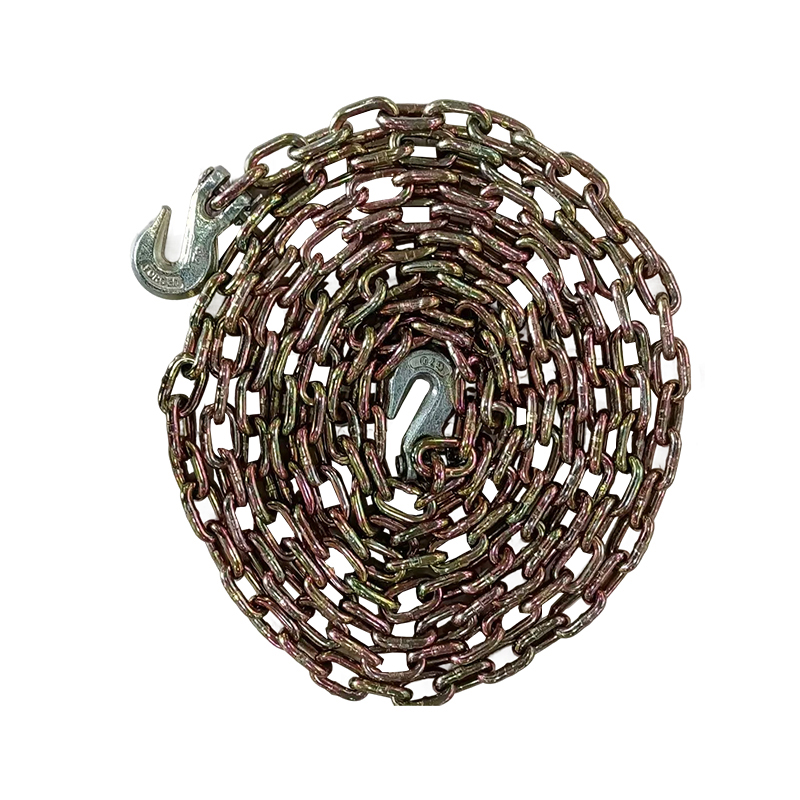
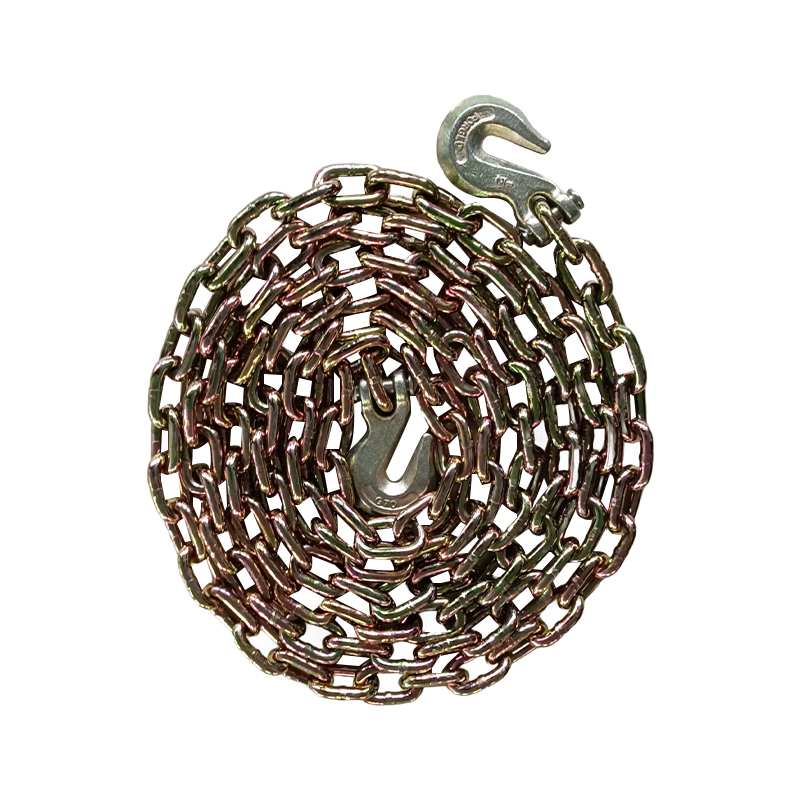
As a critical safety component connecting the towing vehicle and the towed equipment, the trailer chain is constantly subjected to dynamic impact loads from starting, braking, and bumpy road surfaces. Especially when towing heavy machinery, agricultural equipment, or disabled vehicles, the chain not only bears static tension but also frequently encounters instantaneous impacts and alternating stresses. Improper design or material selection can easily lead to fracture due to metal fatigue, causing serious safety accidents.
1. High-strength alloy steel: The material basis for fatigue resistance
Trailer chains are typically made of high-carbon alloy structural steel. This type of material inherently possesses extremely high tensile strength and yield strength. More importantly, its internal grain structure is dense with low impurity content, effectively inhibiting the initiation and propagation of microcracks—the starting point of metal fatigue failure. Some high-end chains also add alloying elements such as chromium, nickel, and molybdenum to further enhance the material's toughness and impact resistance, making the chain less prone to brittle fracture under sudden loading or road bumps.
2. Precise Heat Treatment: Optimizing Internal Structure and Enhancing Toughness
Heat treatment is a core factor determining the fatigue resistance of a chain. Trailer chains typically undergo a dual heat treatment process of quenching and tempering: quenching forms a hard martensitic structure on the chain link surface, improving wear resistance and tensile strength; subsequent high-temperature tempering eliminates internal stress, increases material toughness, and prevents brittle fracture. This process requires strict control of temperature and time to ensure the chain achieves the optimal balance between strength and toughness. Insufficiently tempered chains, while hard, are brittle and prone to cracking under impact; inadequate tempering fails to release residual stress, accelerating fatigue failure. Therefore, professional manufacturers use automated heat treatment lines to ensure consistent performance across batches.
3. Chain Link Structure and Surface Integrity: Reducing Stress Concentration
Fatigue cracks often originate in areas of stress concentration, such as inner bends of chain links, weld points, or surface scratches. Therefore, high-quality trailer chains are designed with large-radius rounded transitions to avoid sharp corners; during manufacturing, precision forging or cold heading ensures uniform chain link geometry and no folding defects. Furthermore, the chain surface undergoes shot peening to introduce a compressive stress layer, effectively delaying the initiation of fatigue cracks. Simultaneously, the smooth surface not only improves corrosion resistance but also reduces localized stress concentration caused by rust pits or burrs.
4. Proper Use and Regular Maintenance: Extending Fatigue Life
Even if the chain itself possesses excellent fatigue resistance, improper use can significantly shorten its lifespan. For example, overloading, oblique force application, and sudden braking or pulling can generate instantaneous impacts far exceeding design values, accelerating fatigue accumulation. Therefore, users should strictly adhere to the safe working load indicated on the chain, ensuring that the force direction during towing is aligned with the chain axis. Additionally, regularly inspect the chain for deformation, cracks, severe wear, or corrosion; replace it immediately if any abnormalities are found. It is worth noting that even if a trailer chain appears intact, chains used frequently over extended periods should be periodically scrapped according to industry standards to prevent sudden breakage due to "hidden fatigue."
Trailer chains may seem rugged and simple, but they actually embody the combined wisdom of materials science, mechanical engineering, and safety regulations. Faced with the "hidden killer" of repeated impact loads, only through the multi-dimensional synergy of high-quality materials, scientific processes, rational use, and standardized management can the safety promise of "no breakage, no loosening, and no failure" be truly achieved. In every hauling mission, this silent metal link, with its resilient body, guards the last line of defense for road transport.
1. High-strength alloy steel: The material basis for fatigue resistance
Trailer chains are typically made of high-carbon alloy structural steel. This type of material inherently possesses extremely high tensile strength and yield strength. More importantly, its internal grain structure is dense with low impurity content, effectively inhibiting the initiation and propagation of microcracks—the starting point of metal fatigue failure. Some high-end chains also add alloying elements such as chromium, nickel, and molybdenum to further enhance the material's toughness and impact resistance, making the chain less prone to brittle fracture under sudden loading or road bumps.
2. Precise Heat Treatment: Optimizing Internal Structure and Enhancing Toughness
Heat treatment is a core factor determining the fatigue resistance of a chain. Trailer chains typically undergo a dual heat treatment process of quenching and tempering: quenching forms a hard martensitic structure on the chain link surface, improving wear resistance and tensile strength; subsequent high-temperature tempering eliminates internal stress, increases material toughness, and prevents brittle fracture. This process requires strict control of temperature and time to ensure the chain achieves the optimal balance between strength and toughness. Insufficiently tempered chains, while hard, are brittle and prone to cracking under impact; inadequate tempering fails to release residual stress, accelerating fatigue failure. Therefore, professional manufacturers use automated heat treatment lines to ensure consistent performance across batches.
3. Chain Link Structure and Surface Integrity: Reducing Stress Concentration
Fatigue cracks often originate in areas of stress concentration, such as inner bends of chain links, weld points, or surface scratches. Therefore, high-quality trailer chains are designed with large-radius rounded transitions to avoid sharp corners; during manufacturing, precision forging or cold heading ensures uniform chain link geometry and no folding defects. Furthermore, the chain surface undergoes shot peening to introduce a compressive stress layer, effectively delaying the initiation of fatigue cracks. Simultaneously, the smooth surface not only improves corrosion resistance but also reduces localized stress concentration caused by rust pits or burrs.
4. Proper Use and Regular Maintenance: Extending Fatigue Life
Even if the chain itself possesses excellent fatigue resistance, improper use can significantly shorten its lifespan. For example, overloading, oblique force application, and sudden braking or pulling can generate instantaneous impacts far exceeding design values, accelerating fatigue accumulation. Therefore, users should strictly adhere to the safe working load indicated on the chain, ensuring that the force direction during towing is aligned with the chain axis. Additionally, regularly inspect the chain for deformation, cracks, severe wear, or corrosion; replace it immediately if any abnormalities are found. It is worth noting that even if a trailer chain appears intact, chains used frequently over extended periods should be periodically scrapped according to industry standards to prevent sudden breakage due to "hidden fatigue."
Trailer chains may seem rugged and simple, but they actually embody the combined wisdom of materials science, mechanical engineering, and safety regulations. Faced with the "hidden killer" of repeated impact loads, only through the multi-dimensional synergy of high-quality materials, scientific processes, rational use, and standardized management can the safety promise of "no breakage, no loosening, and no failure" be truly achieved. In every hauling mission, this silent metal link, with its resilient body, guards the last line of defense for road transport.