
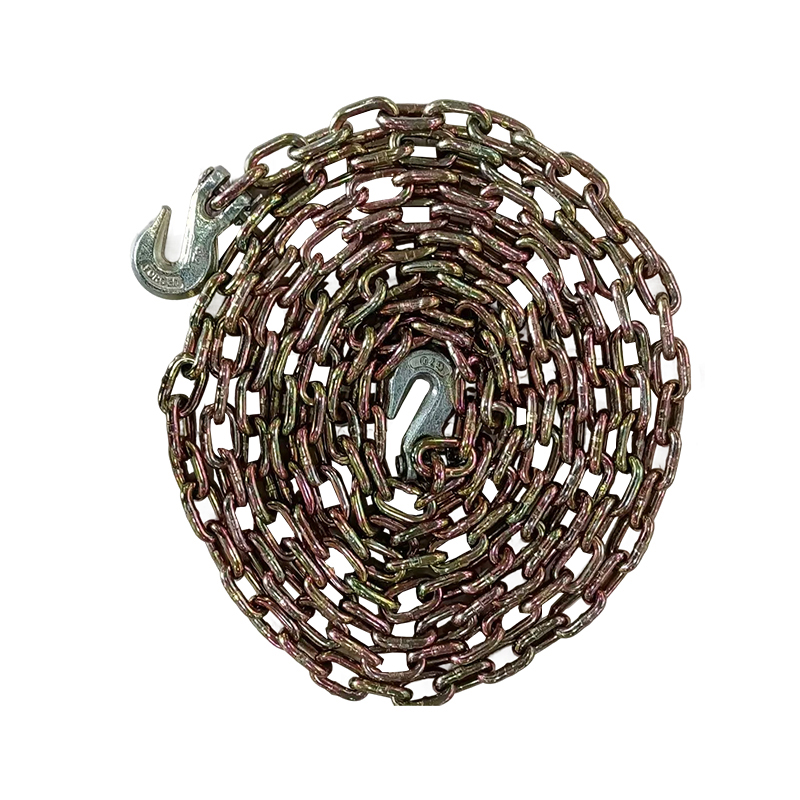
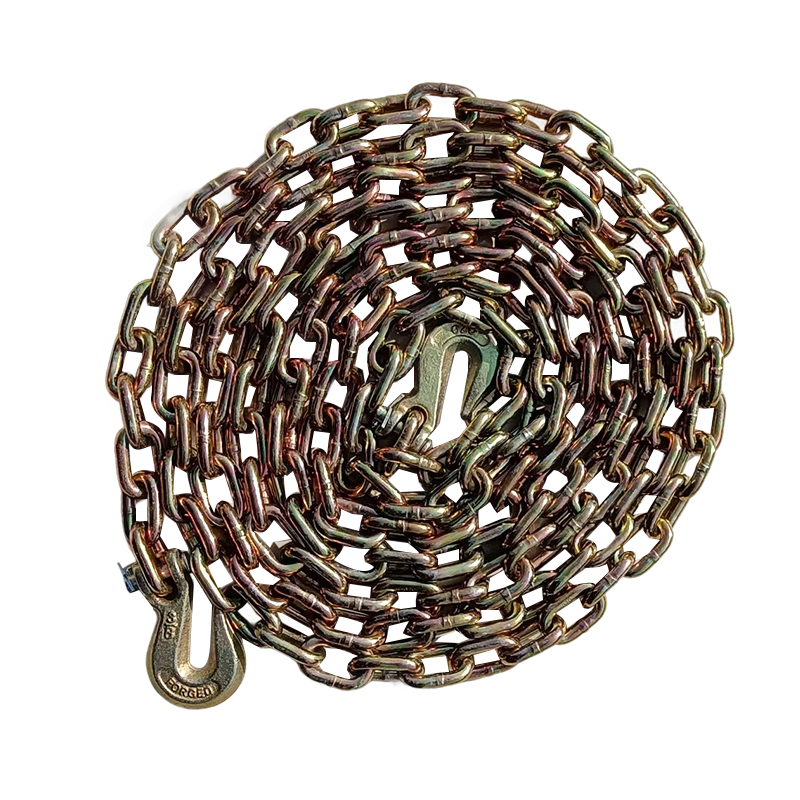
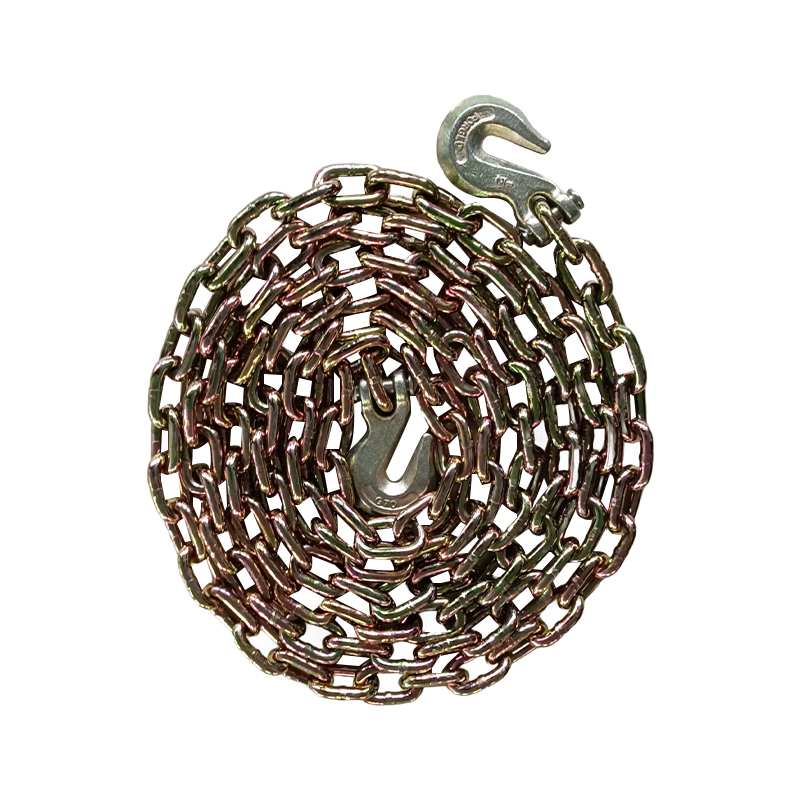
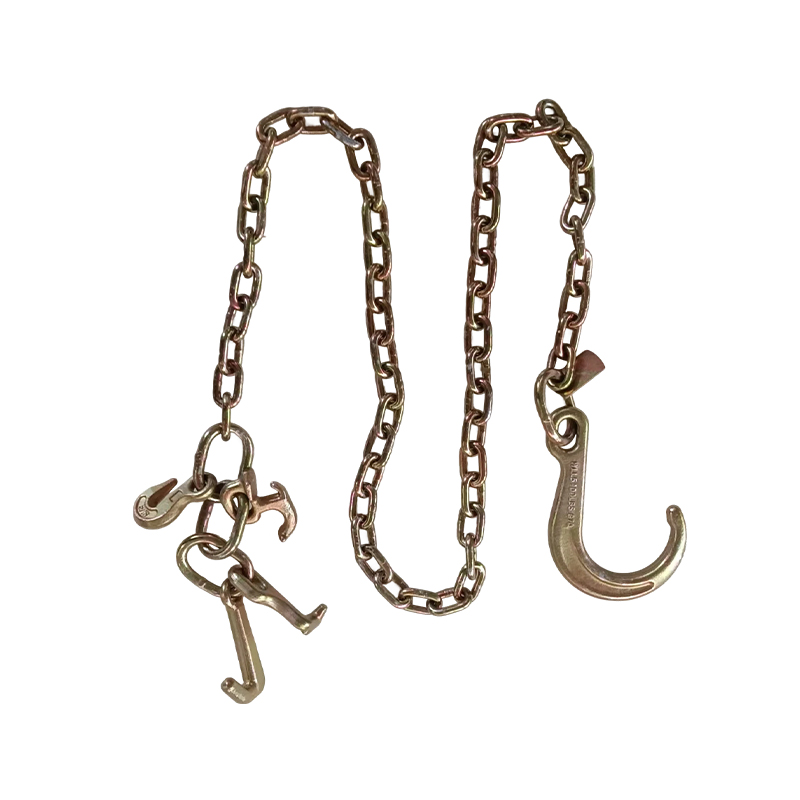


How does the alloy element ratio of a high-quality alloy steel bundling chain affect its balance between tensile strength and toughness?
Release Time : 2025-12-31
The balance between tensile strength and toughness is a core performance indicator of high-quality alloy steel bundle chains, and achieving this balance highly depends on the precise ratio of alloying elements. By scientifically adjusting the content of elements such as carbon, silicon, manganese, chromium, nickel, and molybdenum, its microstructure can be significantly optimized, thereby improving its comprehensive mechanical properties and meeting the dual requirements of high-strength binding and impact resistance.
Carbon is the fundamental element determining the strength and toughness of steel. In high-quality alloy steel bundle chains, controlling the carbon content is particularly crucial. An appropriate amount of carbon can form stable carbides, enhancing the tensile strength of the material; however, if the content is too high, it will lead to grain boundary embrittlement and reduce toughness. Therefore, high-quality alloy steel bundle chains typically use a medium-to-low carbon ratio to ensure sufficient strength while avoiding excessive loss of toughness. For example, when the carbon content is controlled at 0.2%-0.3%, a uniform martensitic structure can be formed after quenching, achieving a preliminary balance between strength and toughness.
The addition of silicon has a dual effect on improving both tensile strength and toughness. Silicon, as a deoxidizer, purifies molten steel, reduces inclusions, and improves material purity. Simultaneously, silicon dissolves in ferrite, strengthening the matrix and increasing yield strength. However, excessive silicon content reduces the material's cold workability and weldability, and may even lead to brittle fracture. Therefore, the silicon content in high-quality alloy steel bundling chains is typically controlled below 0.5%, working synergistically with other elements to maintain toughness while enhancing strength. For example, adding silicon in combination with chromium and molybdenum can form fine carbides, further refining the grain and enhancing toughness.
Manganese is an indispensable strengthening element in high-quality alloy steel bundling chains. Manganese significantly improves the hardenability of steel, enabling large-section materials to obtain a uniform martensitic structure during quenching, thereby increasing tensile strength. Furthermore, manganese can combine with sulfur to form manganese sulfide, reducing the harmful effects of sulfur and improving toughness. However, excessive manganese content reduces the material's weldability and low-temperature toughness. Therefore, the manganese content in high-quality alloy steel bundling chains is typically controlled at 1%-2%, achieving an optimized combination of strength and toughness through a reasonable ratio with carbon and silicon. For example, the synergistic effect of manganese and carbon can form stable carbides, enhancing wear resistance while maintaining sufficient toughness.
The combined addition of chromium and nickel is key to improving the corrosion resistance and toughness of high-quality alloy steel bundling chains. Chromium forms a dense oxide film on the steel surface, improving corrosion resistance while refining grains and enhancing toughness; nickel stabilizes the austenitic structure, improves low-temperature toughness, and enhances the material's machinability. Their synergistic effect allows the bundling chain to operate for extended periods in harsh environments without failure. For example, in austenitic stainless steel containing 18% chromium and 8% nickel, adjusting the carbon and silicon content can achieve a perfect balance between tensile strength and toughness, meeting the requirements for high-strength binding.
The addition of molybdenum can further enhance the high-temperature strength and creep resistance of high-quality alloy steel bundling chains. Molybdenum (Mo) refines grain size and improves hardenability, allowing materials to maintain excellent mechanical properties at high temperatures. Simultaneously, Molybdenum forms stable carbides with carbon, enhancing wear resistance. However, excessive Molybdenum content increases the risk of brittleness. Therefore, the Molybdenum content in high-quality alloy steel bundle chains is typically controlled below 0.5%, achieving a balance between high-temperature strength and toughness through synergistic effects with other elements. For example, the combined addition of Molybdenum with chromium and nickel can significantly improve the tensile strength and toughness of the bundle chain at high temperatures.
The alloy element ratio of high-quality alloy steel bundle chains needs to comprehensively consider factors such as strength, toughness, corrosion resistance, and processing performance. By scientifically adjusting the content of elements such as carbon, silicon, manganese, chromium, nickel, and Molybdenum, its microstructure can be optimized, achieving a perfect balance between tensile strength and toughness. This balance not only improves the overall performance of the bundle chain but also expands its application range, making it an indispensable key material in logistics, construction, energy, and other fields.